How to Clean a Dishwasher Filter (Step-by-Step Guide)
Quick Answer: Remove the bottom dish rack, twist the cylindrical filter counterclockwise, lift it out, and scrub under warm running water with a soft brush and dish soap. For stubborn buildup, soak in warm water with 1 cup white vinegar for 15-20 minutes. The whole process takes under 5 minutes.
Your dishes came out gritty. Or the dishwasher smells like last Tuesday’s leftovers. Or you just realized that thing at the bottom of your dishwasher is a filter, and you have never cleaned it.
All of those roads lead here. A clogged dishwasher filter is the most common cause of poor cleaning and drainage problems. Cleaning it takes less time than loading a full rack of plates.
What You Need
Grab these before you start:
- Soft-bristle brush or an old toothbrush
- Dish soap (any mild brand works)
- White vinegar (for stubborn buildup only)
- Clean towel or microfiber cloth
That is the full list. No specialty tools, no kits to buy.
Do not use: Wire brushes, scouring pads, or metal scrubbers. These tear the fine mesh and create holes that let food particles pass straight through to your drain pump. More on that in Step 4.
How to Clean Your Dishwasher Filter (5 Steps)
Step 1: Remove the Bottom Rack
Pull the bottom dish rack all the way out and set it aside. You need clear access to the dishwasher floor where the filter sits.
Step 2: Locate and Remove the Filter
The filter is located at the bottom of the dishwasher tub, typically near the base of the lower spray arm. On most models, you will see a cylindrical piece that sticks up slightly from the tub floor.
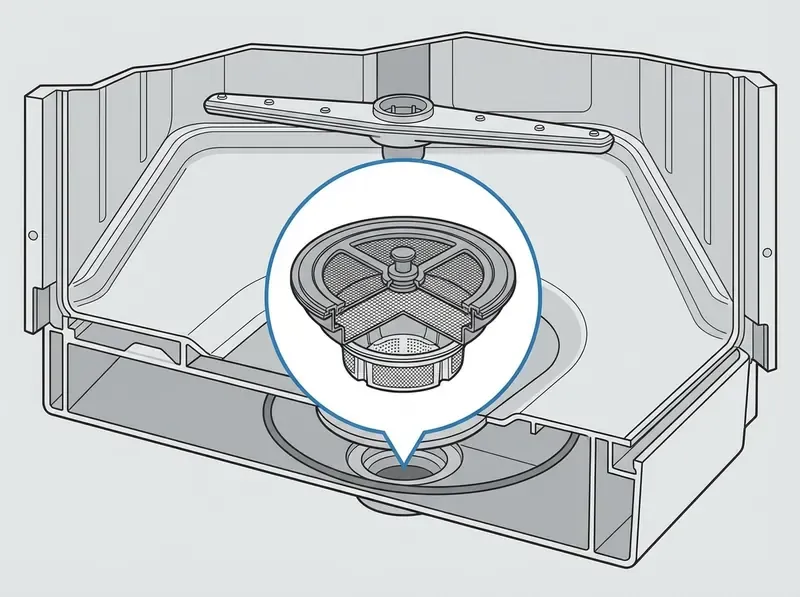
To remove it:
- Grip the top of the cylindrical filter
- Twist counterclockwise about a quarter turn
- Lift straight up
Some models have a secondary flat mesh screen sitting underneath the cylinder. If yours does, lift that out too.
Most dishwashers made after 2010 use manual filters that need monthly cleaning. Older models had self-cleaning filters with a built-in grinder, but manufacturers dropped them because manual filters run quieter.
GE models have both a Fine and Ultra Fine filter at the tub bottom. Remove and clean both. Bosch dishwashers use a 3-part filter system with ultra-fine mesh that tends to clog faster on greasy loads.
Not sure where yours is or what type you have? See our full guide on dishwasher filter types and locations. Whirlpool’s filter guide and Bosch’s filter instructions cover their specific designs.
Step 3: Rinse Under Running Water
Hold the filter under warm running water. Direct the water stream from the inside out to push trapped debris off the mesh. Most loose food particles rinse away immediately.
Pick off any large chunks of food by hand. Seeds, pasta bits, and label fragments are common culprits.
Step 4: Scrub with Soap and a Soft Brush
Apply a small amount of dish soap to your brush. Scrub all mesh surfaces, inside and outside, paying extra attention to:
- Areas with visible grease buildup or discoloration
- The edges and grooves where small particles wedge in
- The bottom of the cylindrical filter where gunk collects
Warning: Never use wire brushes, scouring pads, or abrasive cleaners on a dishwasher filter. The fine mesh tears easily, and a damaged filter allows food particles to recirculate onto your dishes. Stick to soft bristles only.
Step 5: Reinstall the Filter
If your model has a flat mesh screen, place that back in first. Then insert the cylindrical filter into the opening and twist clockwise until it clicks or locks into place.
The filter should sit flush with the tub floor. If it wobbles or feels loose, it is not seated correctly. Give it another twist until it snaps in.
Before you put the filter back, wipe around the sump area where the filter sits. Food debris and grease build up in this well and do not get cleaned when you only wash the filter itself.
Replace the bottom rack, and you are done.
Filter clean but dishes still coming out wrong? The problem may be further downstream. See our guide on what to check when your dishwasher is still not draining after cleaning the filter.
Video: “How to Clean A Dishwasher The Right Way” by Abbotts At Home
Deep Cleaning a Heavily Clogged Filter
If your filter has months (or years) of buildup that regular scrubbing cannot remove, try one of these methods.
Vinegar Soak
Fill a bowl or your sink with warm water and add 1 cup of white vinegar. Submerge the filter for 15-20 minutes. The acetic acid breaks down grease and mineral deposits without harming the mesh. Scrub again with your brush afterward and rinse thoroughly.
We recommend warm water, not boiling. Extreme heat can warp plastic filter frames on some models.
Baking Soda Paste
For stubborn grease that vinegar cannot cut through, make a baking soda paste: mix a few tablespoons of baking soda with just enough water to form a thick paste. Apply it to the greasy spots on the mesh, let it sit for 10 minutes, then scrub and rinse.
You can also combine both approaches. According to GE support, clearing the sump area and filter regularly prevents most drainage problems. AHS recommends 1 cup of baking soda and 1 cup of vinegar poured into the drain area, left for 15-20 minutes, then followed by a hot rinse cycle to clean the broader drain path beyond just the filter.
When Soaking Is Not Enough
If the filter still looks clogged, discolored, or damaged after a deep clean, replace it. Torn mesh, cracked plastic frames, and odor that survives a thorough soak all mean the filter is done. See our guide on dishwasher filter types and locations for replacement advice.
How Often to Clean Your Dishwasher Filter
Once a month is the baseline. Your actual schedule depends on how heavily you use the machine:
| Household Usage | Recommended Frequency |
|---|---|
| Daily loads, no pre-rinsing | Every 2 weeks |
| Daily loads, dishes scraped/rinsed first | Monthly |
| 3-4 loads per week | Every 4-6 weeks |
| 1-2 loads per week | Every 2-3 months |
Set a phone reminder for the first of each month. Filter cleaning is one of those tasks that is easy to forget until gritty dishes remind you the hard way.
Signs Your Filter Needs Cleaning Right Now
Do not wait for the calendar if you notice any of these:
- Gritty or sandy residue on dishes after a cycle
- Standing water in the tub after the cycle finishes
- Your dishwasher smells bad when you open the door
- Food particles redeposited on dishes that went in clean
- Drainage is noticeably slower than usual
A clogged filter is the number one cause of a dishwasher not draining. Food particles and grease pack the mesh over time, restricting water flow through the drain system. A quick monthly cleaning prevents most of these symptoms.
FAQ
Do all dishwashers have a filter that needs to be cleaned?
Most dishwashers made after 2010 have manual filters that need regular cleaning. Older models had self-cleaning filters with a built-in grinder to pulverize food debris. Those are louder but do not need manual cleaning.
To check yours: open the dishwasher, remove the bottom rack, and look at the center of the tub floor. If you see a removable cylindrical piece you can twist and lift out, you have a manual filter that needs cleaning.
Can you clean a dishwasher filter with vinegar?
Yes. Soak the filter in warm water with 1 cup of white vinegar for 15-20 minutes. This works on grease, hard water mineral deposits, and buildup that scrubbing alone misses.
You can also run a vinegar rinse cycle to clean the whole dishwasher interior: place a cup of white vinegar in a bowl on the top rack and run an empty hot cycle. This cleans the spray arms, drain path, and interior walls, but does not replace physically removing and scrubbing the filter.
What happens if you never clean your dishwasher filter?
Three things, in order. First, food particles redeposit on dishes because the clogged filter cannot trap them. Second, trapped food decomposes and creates a bad smell. Third, restricted water flow causes drainage problems and can damage the drain pump as debris works past the clogged filter.
A clogged filter is the most common reason a dishwasher stops draining properly.
How do I clean my dishwasher filter without removing it?
You cannot clean it properly without removing it. Running a hot vinegar cycle helps the overall interior but does not scrub food particles off the filter mesh. Removal takes about 60 seconds: twist counterclockwise, lift straight up, scrub, and put it back. No shortcut produces the same result.
Still having drainage issues after cleaning the filter? See our complete guide on dishwasher not draining for all causes and fixes.